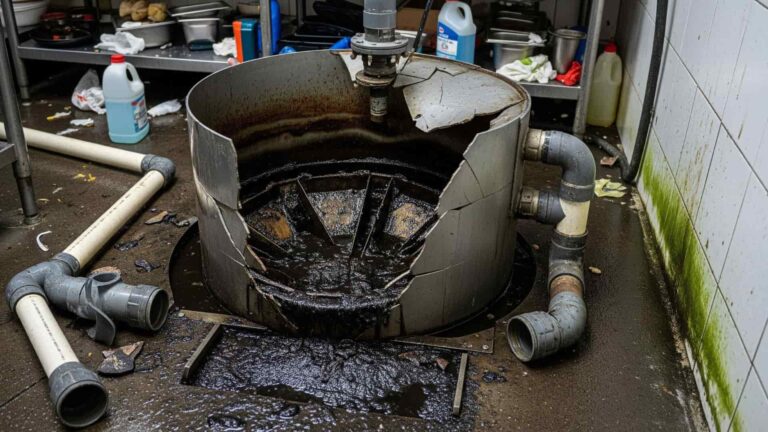
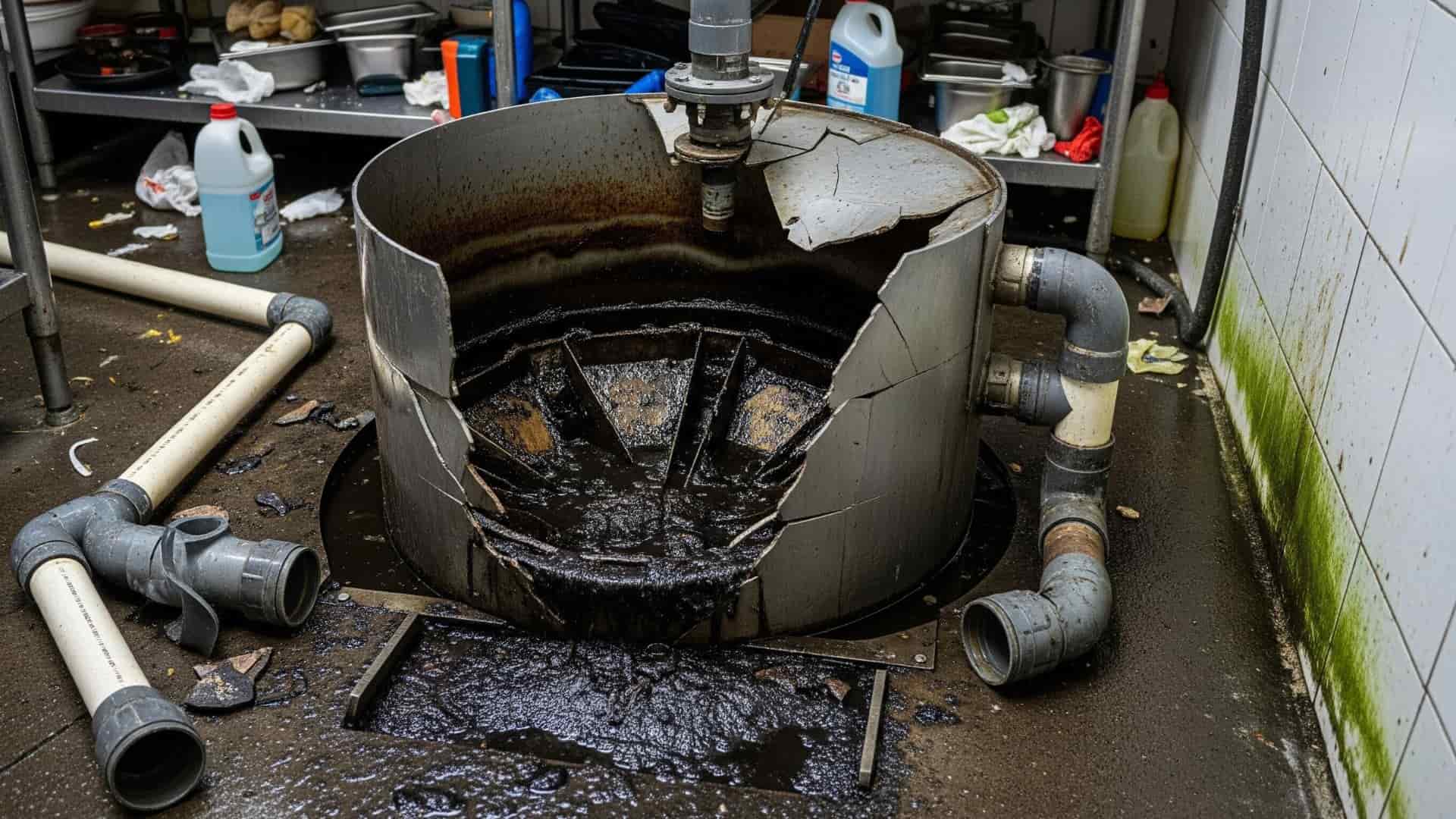
Slow drains, bad smells, or the occasional backup aren’t “just busy kitchen problems” — they’re early warnings your grease trap is approaching failure.
Catching these signs early keeps your venue compliant, protects your plumbing, and prevents expensive downtime.
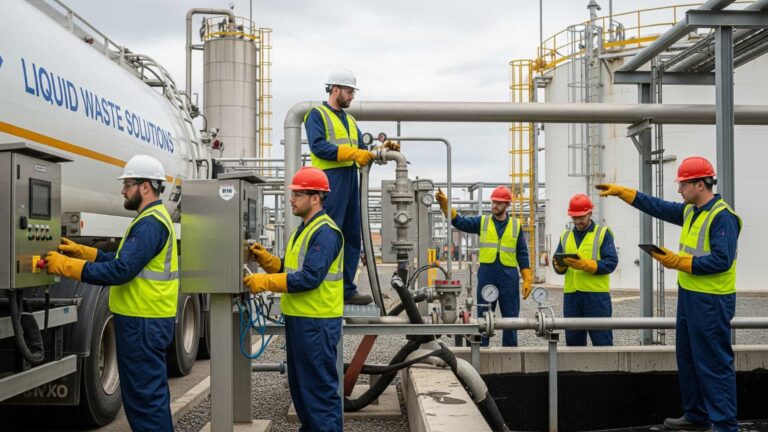
Teams like us at Direct Waste offer professional grease trap cleaning services for commercial kitchens and any other company stuck with a dirty grease interceptor.
This guide explains the key red flags to watch for, what they mean, and the safest next steps.
Why early detection matters
Grease traps are designed to intercept fats, oils and grease (FOG) before they reach your pipes and the sewer.
When they’re overloaded or poorly maintained, you risk:
- Unplanned closures due to overflows and unsanitary conditions
- Blocked drains and costly plumbing repairs
- Non-compliance with local trade waste requirements
- Odours that impact staff, customers and brand reputation
The good news: most failures are preventable with timely servicing and trained support from a trusted provider like Direct Waste.
7 Warning Signs of a Failing Grease Trap
1) Slow drainage in sinks and dishwashers
If sinks, dishwashers or floor wastes are taking longer to empty, grease and food solids are likely narrowing flow through the trap and connected lines.
Left unchecked, slow drains escalate to complete blockages.
What this tells you
- FOG and solids are accumulating faster than the trap is being serviced
- Outlet or inlet lines may be partially obstructed
Next steps
- Book a professional inspection and pump-out
- Review recent volume changes (menu, peak periods) that may require a new service cadence
2) Persistent foul odours near drains
Distinctive, unpleasant smells around sinks, floor drains or the trap often mean organic matter is decomposing inside the unit. Odours are both a hygiene and compliance concern.
What this tells you
- The trap is overdue for cleaning and the FOG layer is too high
- There may be residual sludge in the base of the trap
Next steps
- Arrange a pump-out and full clean (including sludge removal)
- Confirm lid seals and gaskets are intact to minimise vapour escape
3) Grease overflow or solid food particles backups
When a trap reaches capacity, FOG can back up into sinks, floor wastes or out of the trap itself. Overflows are a sanitation event that may force a temporary closure.
What this tells you
- Service frequency is insufficient for current FOG load
- Grease may have entered downstream pipes and begun to solidify
Next steps
- Stop using affected fixtures and call a licensed grease trap service
- Request line jetting if downstream build-up is suspected
- Record the incident for audit and adjust your maintenance schedule
4) Visible fats, oils, and grease build-up
Excessive grease on the trap surface, sediment at the bottom, or grease rings in sinks and external covers indicate capacity has been exceeded.
What this tells you
- FOG and solids layers are beyond recommended thresholds
- The trap may be undersized for your venue’s throughput
Next steps
- Schedule a clean and ask your technician to document FOG and sludge levels
- Assess sizing and kitchen practices (e.g., scraping practices, pre-rinse) with your provider
5) Gurgling or unusual drain noises
Gurgling suggests air is being forced through partially blocked lines.
This often appears before visible backups.
What this tells you
- Wastewater is struggling to move past a restriction
- Build-up is present within the trap, the inlet, or outlet lines
Next steps
- Book a diagnostic inspection and clean
- Consider hydro-jetting to restore full pipe capacity
6) Frequent clogs across multiple drainage systems fixtures
Repeated blockages at sinks, dishwashers and floor wastes point to a systemic issue — usually a grease trap that isn’t separating FOG effectively.
What this tells you
- Both incoming and outgoing lines may be compromised
- Internal baffles or components may be damaged or misaligned
Next steps
- Request a full condition assessment (not just a pump-out)
- Repair or replace worn components to restore separation performance
7) You’re pumping more than once a month
Most venues need grease trap servicing every one to three months, depending on volume.
If you’re booking cleans more often than monthly, there’s likely a mismatch or fault.
What this tells you
- The trap may be undersized for your peak service
- Kitchen practices are generating excessive FOG
- Internal trap performance is reduced (e.g., damaged baffles)
Next steps
- Undertake a usage review and sizing check with a specialist
- Optimise staff practices (scrape plates, capture solids, avoid hot oil down sinks)
- Set a data-backed service cadence that prevents overfill
What to do when you spot a warning sign
Avoid DIY attempts to clear grease — it can push FOG further into the system and increase risk.
Instead:
- Call a licensed provider for an immediate inspection and pump-out
- Request photographic reporting of FOG/sludge levels for your records
- Ask for inlet/outlet line checks and jetting if flow is restricted
- Review your service interval based on actual FOG generation
Prevention: simple grease trap cleaning tips
- Train staff to scrape plates and capture solids before rinsing
- Use sink strainers and empty them into general waste
- Store waste oil for recycling — never pour it down sinks
- Keep a log of clean dates, volumes and any issues
- Partner with a provider that offers traceable reporting and scheduled reminders
How Direct Waste helps commercial kitchens stay compliant and odour-free
Direct Waste provides end-to-end grease trap and septic services across Australia’s eastern seaboard. Our EPA-aligned processes focus on safety, compliance and minimal disruption to your operations.
Why businesses choose Direct Waste
- Scheduled pump-outs matched to your actual FOG generation
- High-pressure clean and capture to restore flow capacity
- Chain-of-custody and service reporting for audits
- Advice on sizing, kitchen practices and service optimisation
- 24/7 support for urgent blockages and spill incidents
Whether you manage a single café or a multi-site operation, we’ll tailor a practical program that keeps you compliant and keeps the doors open.
Quick checklist: is your grease trap at risk?
- Drains slowing down or gurgling
- Persistent odours around sinks or floor wastes
- Visible grease build-up or rings
- Backups or overflows during service peaks
- Multiple fixtures clogging simultaneously
- Pump-outs needed more than once a month
If you ticked any of the above, it’s time to act.
Next step
Protect your venue, pipes and reputation. Request a quote or book a service with Direct Waste today. Request a quote | Book a grease trap service Spot slow drains, odours and backups—7 signs your grease trap is failing and what to do. Keep kitchens compliant with Direct Waste’s expert grease trap services.