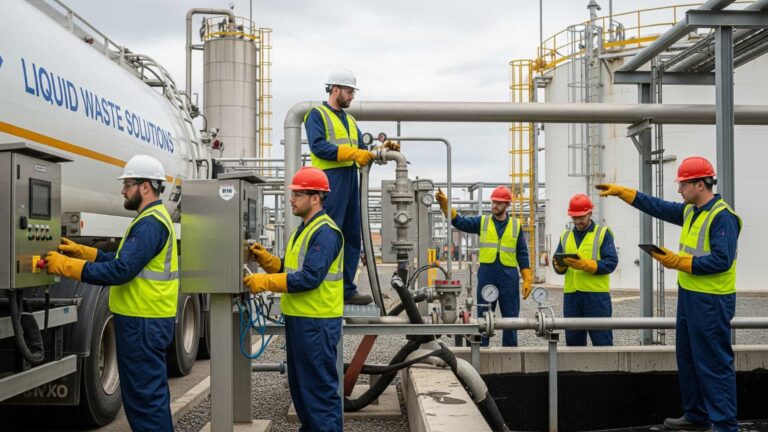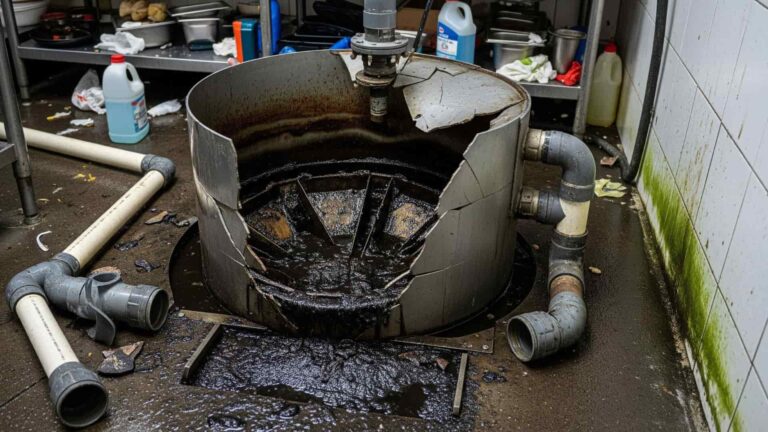
Oily water storage and disposal involves a good deal of liquid waste management knowledge. Luckily, we have droves of it at Direct Waste.
Our responsible oily water disposal team works alongside wastewater treatment and oily water treatment plants to safely store, transport, and dipose of oil and water mixtures as per environmental regulations.
We use tools like oily water separators and dissolved air flotation devised to manage and treat wastewater from oil spills and other places were oil and water mix.
This blog looks at some of our oily water management and treatment systems, as well as the industrial processes behind waste water management.
Understanding the nature of oily wastewater
Oily water is not simply water with a hint of oil. It is a complex waste stream composed of water, hydrocarbons, suspended solids, emulsified oils and often residual chemicals or metals.
It goes without saying that this can harm aquatic life and humans due to the harmful substancesfound in oily water.
The nature of the contaminant mixture means that simply sending the waste off without addressing separation, storage and transport can lead to escalating costs, regulatory issues and environmental harm.
In a B2B context the stakes are higher: equipment downtime, licence compliance burdens, logistics costs and reputational risk all combine.
A well-designed storage and disposal regime offers a safeguard against those risks and promotes operational resilience.
Storage challenges for oily water waste
Effective storage of oily water is a foundational part of the waste-management chain. When stored poorly the likelihood of leaks, spills, mixing of incompatible wastes, or loss of value through degradation all increase.
At Direct Waste we recommend taking an operational review of your current storage arrangements.
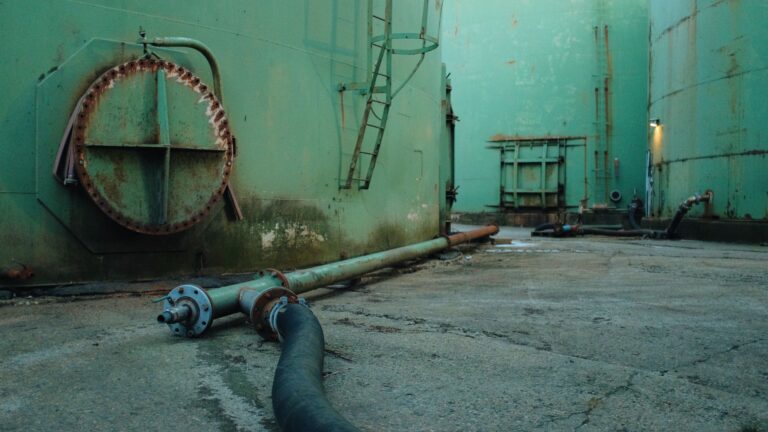
Key considerations include the tank or container materials (are they compatible with oily mixtures?), whether the base is sealed and bunded, how rainfall or stormwater ingress is managed, how any contaminated water within bunds is handled, and whether decanting or pumping equipment is fitted to remove water or oil layers.
Experience in the field indicates that many incidents stem from seemingly modest failures in containment or ingress control rather than major system malfunctions.
Oil water storage best-practice considerations
When designing or auditing your storage of oily water, start by reviewing the pathway from generation to final disposal. Every step in that supply chain offers an opportunity to improve efficiency and reduce risk.
Ensure first that the storage container or tank is located on a sealed, impervious surface and that a bund or rollover barrier is present to capture any leaks or overflow.
The storage area should be clearly segregated so that only compatible waste types are stored together. As one industry guide puts it, incorrect classification or mixing of wastes is a serious hazard.
Routine inspection of the tank and containment area is key. Poor condition of hoses, decanting pumps, tank walls or bund linings will degrade system performance and increase risk of spill.
It is important to monitor for layering within the tank (oil-on-water, sludge accumulation) and plan for periodic removal of free water and settled solids so that the oily-water volume remains well managed and the “oil-rich” fraction is concentrated for disposal or recycling.
Treatment and separation on-site
The goal of storage is not simply to hold the waste until disposal but to prepare the waste for efficient treatment or recovery.
From a service provider perspective, when Direct Waste attends a site and collects oily water the less “bulk water” relative to “oil-rich concentrate” the lower the transport and treatment costs, and the more viable the recovery of oil for recycling becomes.
Many Australian firms are embracing circular-economy models where used oil is recovered and reused rather than simply being discarded.
Transport and disposal strategy of treated water
Once packed and prepared for removal, the next link is transport to a licensed treatment or disposal facility.
In practical terms, work with your waste management partner to ensure that the service schedule aligns with your site’s production or maintenance cycles.
Unexpected surges in oily-water generation, like after equipment washdowns or major maintenance, should be flagged so collections can be scheduled proactively rather than reactively.
At the facility end the goal is to separately manage the oil and water fractions, recover what oil can be recycled or re-refined, and treat or dispose of the water component efficiently.
Integrating storage, treatment and disposal into operational planning
For enterprises seeking an efficient oily-water management system, integration is critical. Storage decisions must align with treatment capacity, transport frequency and disposal economics.
Begin by mapping your oily-water flows. Quantify how much oily water is generated per week or month, what the oil-to-water ratio is (or approximate it), and when peak loads occur. These data allow you to size storage tanks correctly, avoid overflow risk and optimise service frequency.
Next, align storage with treatment. If you use coalescers or sub-separators, ensure you have the right throughput and monitoring. Ensure storage does not become “holding ponds” that degrade the oil content or make the downstream separation less effective.
Thirdly, consider scheduling. Many workshops or facilities schedule major washdown nights or maintenance shutdowns that generate heavier oily-water loads.
If your service partner can attend just ahead of such events your system remains robust. Direct Waste can partner with you to develop a calendar of service aligned with your operational rhythms.
Minimising cost and maximising value
A well-managed oily-water system reduces costs in several ways. By storing and treating on-site you reduce the volume sent for off-site disposal.
By recovering oil you may realise value or at least offset disposal charge. By scheduling service you avoid emergency call-outs or overflow clean-ups which tend to be very expensive.
Finally, by working with a reliable provider you benefit from their operational know-how and economies of scale.
Choosing the right oil water separators partner and systems
When selecting a service provider and the equipment to support your oily-water management ensure you ask key questions:
- Does the provider service your region?
- Do they offer tank-cleaning, decanting, separation and transport?
- What are their lead times and emergency response capability?
- Do they offer monitoring, reporting and filtration options?
From the equipment side ask whether your storage is designed to handle oily-water waste, whether it allows for water-drain off or oil skimming, whether measurement and monitoring (volume, oil‐water interface) tools are fitted, and whether the system is compatible with your oily-water composition.
Direct Waste offers a comprehensive suite of services across Australia and can assist clients in establishing storage systems, scheduling services and engaging the correct disposal routes. .
Our experience in industrial settings means we understand how oily-water and workshop waste integrate into broader liquid-waste landscapes.
Operational hygiene and site practices
Even with a sound storage and disposal regime the operational practices on site matter.
Staff and contractors must be trained to recognise what increases oily-water generation (for example equipment washdown, leaks, hydraulic fluid changes), to report pooling or drains that appear contaminated, and to reliably separate waste streams at source.
Preventing non-oil water ingress into the storage tank reduces cost and improves separation.
Clear signage at collection points, daily checks for unexpected water ingress or stormwater entry, and scheduling of tank decanting all contribute to system health.
Regular visual inspections of storage bunds and surroundings are simple but effective.
Identifying pooling water, oil sheen, tank rust or containment cracks at an early stage avoids major clean-up later. Maintaining records of service visits, volumes removed and any anomalies assists transparency and allows trend-tracking.
Final thoughts
For Australian businesses operating in sectors that generate oily-water waste, managing the storage, treatment and disposal chain is a strategic necessity.
By understanding the nature of the waste stream, mounting the right storage arrangements, implementing on‐site separation where appropriate, scheduling timely removal and aligning with a trusted service provider you gain control of both risk and cost.
At Direct Waste we believe that oily-water management should not be an afterthought but an integrated component of your liquid-waste ecosystem.
With thoughtful planning, proactive service and appropriate equipment your business can deliver operational resilience, environmental confidence and financial benefit.